
Reducing Blueberry Softening and Splitting Under Rain Conditions
Managing Osmotic Pressure Around the Roots Using Sensors
One of the key properties of a cell membrane is its ability to selectively allow water to pass into or out of the cell. This process is called osmosis.
If the solution on one side of the membrane is more concentrated (i.e., contains more salts) and the solution on the other side is more diluted (the water is “cleaner,” with fewer salts), water moves toward the side with the higher concentration. Osmosis seeks to equalize the concentrations on both sides. The “driving force” behind this movement is called osmotic pressure.
This also explains why a plant can be damaged or suppressed when irrigated with very salty water: in such conditions, it becomes difficult for water to enter the root cells because the osmotic pressure in the surrounding environment is too high.
Conversely, if the water around the roots is less salty than the fluid inside the root cells, water enters the roots until the concentrations become more or less balanced.
Why does fruit soften and split during rain?
Rainwater contains virtually no salts. Therefore, during rainy periods the solution around the roots becomes sharply diluted. As a result, water enters the roots more easily and then moves through the plant, including into the fruit. This leads to:
- reduced fruit firmness (softening),
- increased risk of fruit splitting.

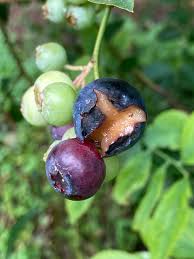
This is one of the main mechanisms why rain during harvest often reduces the fruit’s marketability and increases losses for growers. Such events are common in Western Georgia.
Solution: Can we “manage” osmotic conditions in the root zone?
In practice, one approach is to control the solution around the roots through fertigation (adding fertilizers/salts) before rain or during rainy periods. Farmers in Georgia already use this and often call it “stressing the plant,” although a properly planned action should aim not to create stress, but to stabilize the root zone.
To make the action correct and safe, it is necessary to measure the electrical conductivity in the soil/substrate pore water (ECp).
ECp and osmotic pressure: what is the relationship?
The concentration of ions in a solution determines both its EC value and, at the same time, its osmotic pressure. Therefore, higher pore-water EC (ECp) generally indicates higher osmotic pressure, and vice versa.
This relationship differs in magnitude for different salts. It is useful to have appropriate calculation tables.
A simple principle
The root zone should be managed to avoid both extremes:
- Very high ECp (> 1.5 dS/m) / high osmotic pressure:
restriction of root function, increased risk of root damage, and reduced fruit quality. - Very low ECp / low osmotic pressure (after rain):
insufficient nutrition, nutrient imbalance, and increased risk of soft fruit.
Practical management: how to maintain osmotic stability during rain
Osmotic management means controlling nutrient (salt) concentration in the root zone and preventing a sharp decrease caused by rainwater dilution.
This can be achieved by supplying a fertilizer (salt) solution to the roots via the fertigation system before rain and during rainfall. Different salts change osmotic pressure around the roots to different degrees, and this should be managed through precise calculations.
At the same time, the electrical conductivity of the pore water (ECp) should be monitored online.
A key question is how to run this process as economically as possible—minimizing fertilizer (salt) costs while also reducing potential harm to the plant.
For guidance on managing this process, contact ProAgro for consultation.